
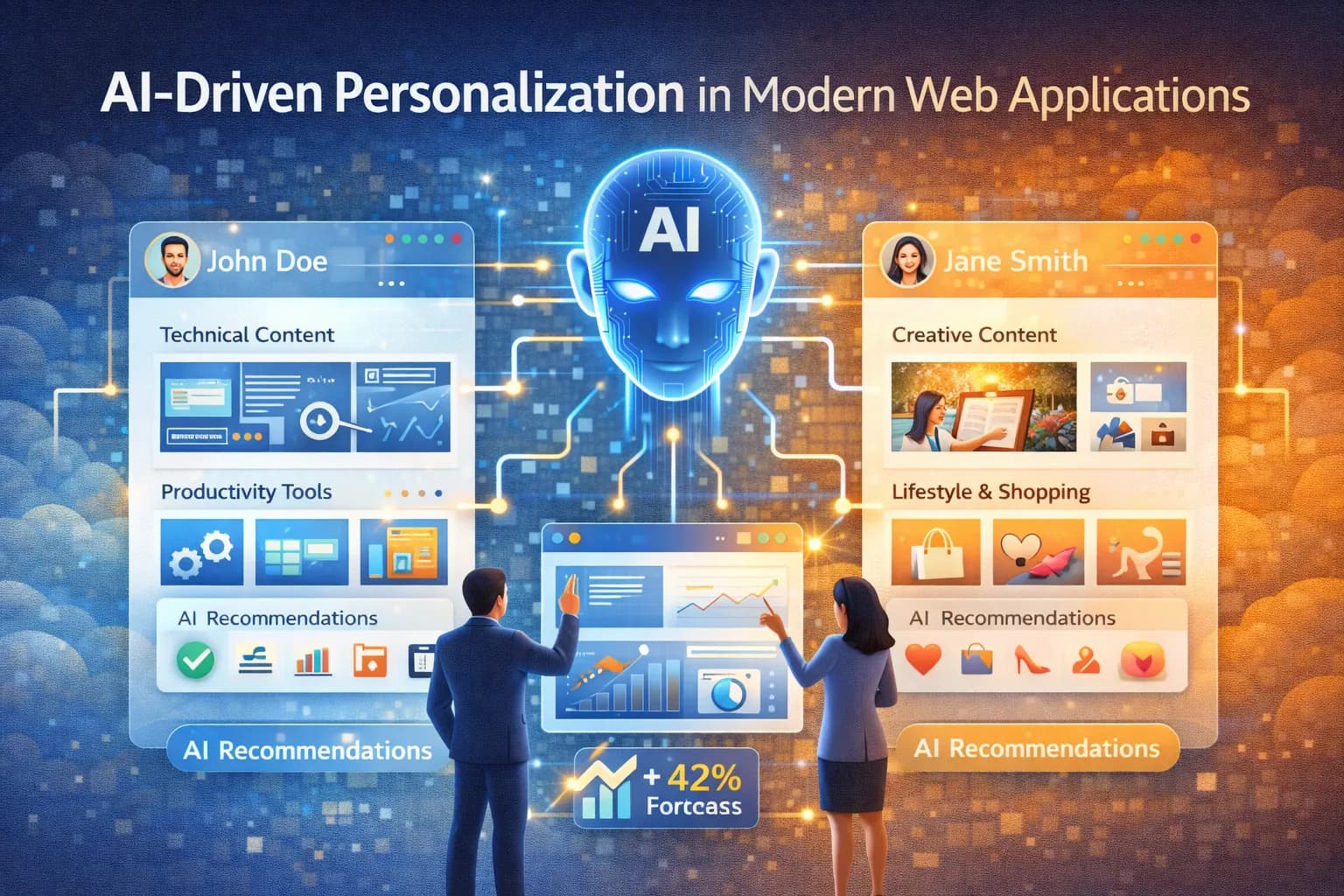
AI-Driven Personalization in Web Applications
Md Sharif Foysal Shoron
Author
User expectations for digital products have changed significantly. Modern users expect applications to adapt to their preferences, behavior, and needs rather than delivering the same static experience to everyone. AI-driven personalization enables web applications to meet these expectations by dynamically adjusting content, features, and interactions.
Personalization powered by AI goes beyond simple rules or filters. It uses data-driven insights to understand users at scale and deliver experiences that feel relevant and intuitive. For businesses, this leads to higher engagement, improved retention, and stronger conversion rates.
What AI-Driven Personalization Means
AI-driven personalization uses machine learning models to analyze user behavior, preferences, and historical data. Based on these insights, applications can customize content, recommendations, navigation, and notifications for each user.
Unlike rule-based personalization, AI adapts continuously. As user behavior changes, the system updates its understanding and refines the experience automatically.
Key Areas Where Personalization Adds Value
Content and Feature Recommendations
AI-powered recommendation engines suggest relevant content, products, or features based on user behavior. This reduces friction and helps users discover value faster.
Adaptive User Interfaces
Personalized interfaces prioritize the most relevant actions and information for each user. Dashboards, menus, and layouts can adapt based on usage patterns.
Intelligent Notifications
AI determines the right time, channel, and message for notifications, reducing noise while increasing engagement.
Data Foundations for Personalization
Effective personalization depends on high-quality data. User interactions, preferences, session history, and contextual signals form the basis of AI models.
Backend systems must collect, process, and store this data securely and efficiently. Frameworks like Django provide a strong foundation for managing user data and APIs.
Privacy and Transparency Considerations
Personalization must respect user privacy and regulatory requirements. Clear consent, data minimization, and transparent explanations build trust.
Performance and Scalability Challenges
Real-time personalization introduces performance challenges. Caching strategies, asynchronous processing, and optimized APIs are essential to maintain responsiveness.
Measuring the Impact of Personalization
Businesses should measure personalization success using engagement metrics, retention rates, conversion improvements, and user satisfaction.
How Square Tech IT Implements AI Personalization
At Square Tech IT, we design AI-driven personalization systems that balance relevance, performance, and privacy. Our solutions integrate seamlessly into web applications, delivering measurable business value.