
AI for Workflow Automation in Businesses
Md Sharif Foysal Shoron
Author
Workflow automation has long been used by businesses to reduce manual effort and improve operational consistency. Traditional automation relies on predefined rules and fixed logic, which works well for simple, repetitive tasks. However, as businesses grow and processes become more complex, rule-based automation alone often reaches its limits. This is where artificial intelligence transforms workflow automation into a more adaptive and intelligent system.
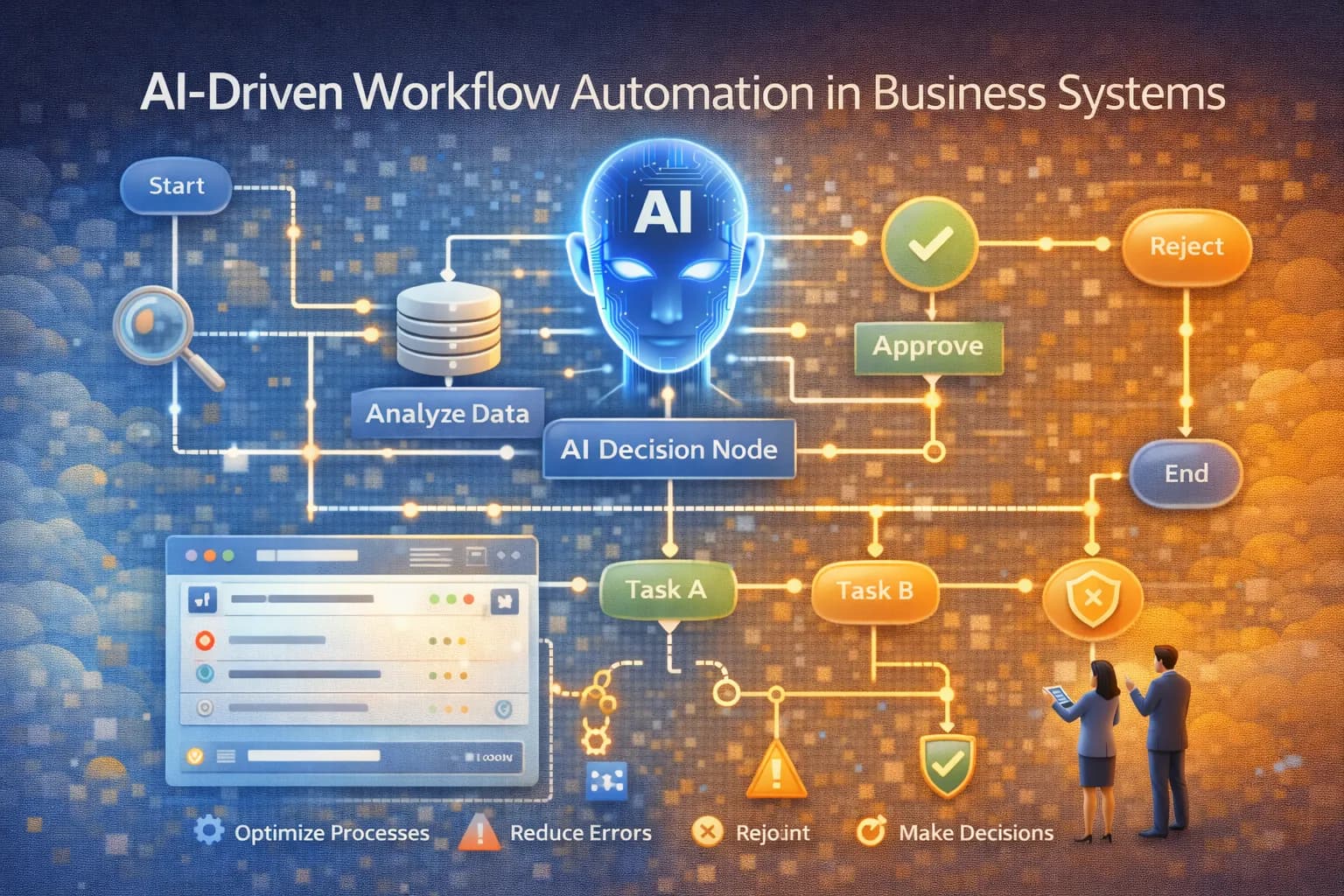
AI-powered workflow automation introduces learning, prediction, and decision-making into business processes. Instead of simply executing instructions, AI-enhanced workflows can analyze data, adapt to changing conditions, and optimize outcomes over time. This shift allows organizations to automate not just tasks, but entire decision-driven processes.
Understanding Workflow Automation in a Business Context
Business workflows represent sequences of tasks that move work from initiation to completion. These workflows often involve approvals, data validation, notifications, and coordination between multiple teams or systems. Traditional automation improves efficiency by removing manual steps, but it cannot handle ambiguity or exceptions effectively.
AI enhances workflow automation by introducing intelligence into these processes. Instead of stopping when unexpected situations arise, AI-enabled workflows evaluate context, learn from historical data, and determine the most appropriate next action.
How AI Enhances Workflow Automation
AI-driven workflow automation combines machine learning models, data analytics, and automation engines. This combination allows workflows to evolve over time rather than remain static.
Intelligent Decision-Making
AI models analyze historical outcomes, patterns, and contextual data to make informed decisions within workflows. For example, an AI system may decide whether a request requires manual review or can be approved automatically based on risk factors.
Adaptive Process Optimization
Over time, AI systems learn which workflow paths produce the best outcomes. This allows businesses to continuously optimize processes without rewriting automation logic manually.
Common Business Use Cases for AI Workflow Automation
AI-driven workflow automation applies across multiple business functions, delivering value wherever processes involve repetition, data analysis, or decision-making.
Operations and Back-Office Processes
AI automates document processing, invoice approvals, inventory management, and compliance checks. These workflows benefit from AI’s ability to detect anomalies and prioritize actions.
Sales and Customer Operations
AI-powered workflows route leads, score prospects, and trigger follow-ups automatically. This ensures sales teams focus on high-value opportunities while routine actions are handled by the system.
Human Resources and Internal Processes
HR workflows such as recruitment screening, onboarding, and performance tracking become more efficient with AI-driven decision support.
Data as the Foundation of Intelligent Workflows
AI-driven workflows depend heavily on data quality. Structured, consistent, and timely data enables AI models to make accurate decisions. Poor data quality results in unreliable automation and reduced trust in the system.
Backend platforms like Django play a crucial role by managing data validation, APIs, and access control that support reliable workflow execution.
Architecture Considerations for AI Workflow Automation
Scalable AI workflow systems require modular architecture. Separating decision logic, automation execution, and data pipelines improves maintainability and scalability.
API-driven designs allow workflows to integrate with external systems, third-party services, and internal tools without tight coupling.
Risk Management and Human Oversight
AI workflow automation should include safeguards. High-risk decisions must allow for human review, and systems should provide clear audit trails for accountability.
Business Benefits of AI Workflow Automation
AI-driven workflow automation reduces operational costs, improves accuracy, and increases scalability. Businesses can respond faster to change while maintaining consistency and control.
How Square Tech IT Builds AI Workflow Automation
At Square Tech IT, we design AI-powered workflow automation systems that align with real business processes. Our solutions combine intelligent decision-making with reliable automation, ensuring workflows remain efficient, secure, and adaptable as organizations grow.