
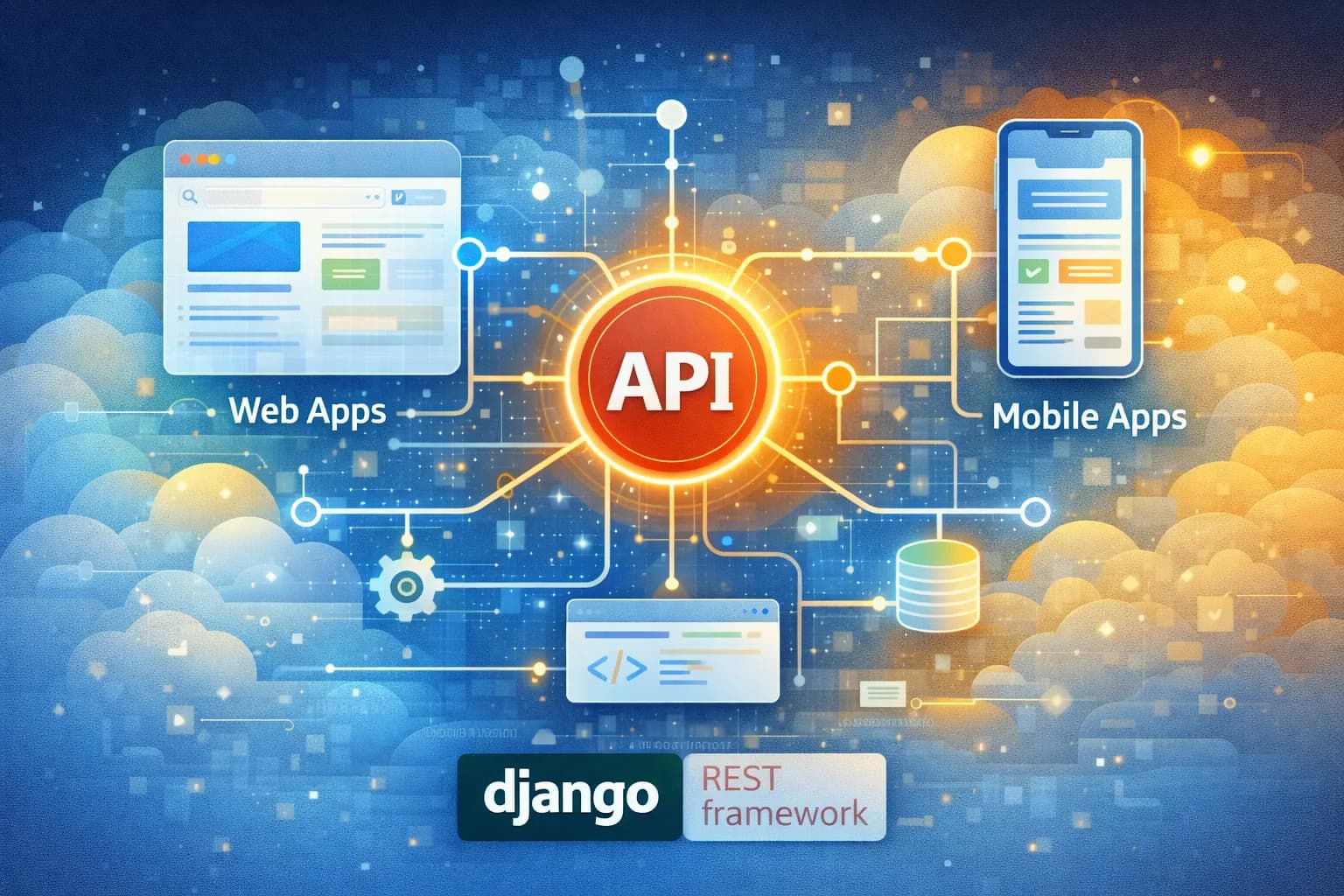
Why API-First Development Is Essential for Scalable Web Applications
Md Sharif Foysal Shoron
Author
Modern web applications are no longer built for a single interface. Today’s digital products often power websites, mobile applications, internal dashboards, and third-party integrations at the same time. As systems grow more complex, maintaining consistency and scalability becomes a major challenge. API-first development addresses this challenge by treating the back-end as a central, reusable service that all platforms depend on.
Instead of building back-end logic around a specific front-end, API-first development focuses on designing well-structured APIs before any user interface is created. This approach allows applications to grow, adapt, and integrate with new platforms without requiring major architectural changes.
What API-First Development Really Means
API-first development is an architectural approach where APIs are designed as the primary interface to the system. Business logic, data access, and security rules live entirely in the back-end, while front-ends consume data through well-defined endpoints.
This ensures that all platforms receive consistent data and behavior, whether it is a web application, mobile app, or third-party service. The back-end becomes the single source of truth, reducing duplication and inconsistency across the system.
Key Benefits of API-First Architecture
Front-end Independence and Flexibility
One of the biggest advantages of API-first development is front-end independence. Teams can build and update web interfaces, mobile apps, or admin dashboards without changing back-end logic. This allows faster iteration, parallel development, and easier adoption of new technologies.
Improved Scalability and Maintainability
API-first systems scale more naturally as applications grow. Because logic is centralized, performance optimizations, security updates, and new features can be applied in one place. This reduces technical debt and simplifies long-term maintenance.
Easier Third-Party Integrations
Well-designed APIs make it easier to integrate payment gateways, analytics tools, CRM systems, and other third-party services. This flexibility is essential for SaaS platforms and modern digital ecosystems.
Why Django REST Framework Is Ideal for API-First Development
Django REST Framework (DRF) provides a powerful toolkit for building API-first back-ends. It offers serializes for data validation, authentication mechanisms, permission controls, pagination, and rate limiting out of the box.
DRF makes it easy to design predictable, secure APIs that remain stable as applications scale. Its permission system allows fine-grained access control, ensuring sensitive data and actions are protected across all consuming platforms.
Security and Consistency Across Platforms
Security becomes more manageable in API-first systems because all access is funneled through controlled endpoints. Authentication, authorization, and validation rules are enforced consistently, reducing the risk of accidental exposure or inconsistent behavior between platforms.
This approach is especially important for SaaS platforms, where multiple user roles, permissions, and integrations must coexist securely.
API-First Development as a Business Advantage
From a business perspective, API-first development reduces long-term costs and increases adaptability. New platforms can be added without rewriting back-end systems, and partnerships become easier to support through secure integrations.
API-first architecture also future-proofs applications. As technology evolves, businesses can adopt new front-end frameworks or devices without disrupting core systems.
How Square Tech IT Builds API-First Django Systems
At Square Tech IT, we design API-first Django back-ends that prioritize scalability, security, and long-term maintainability. Our systems are built to support web applications, mobile platforms, and third-party integrations from the start.
By combining Django REST Framework with clean architecture and thoughtful API design, we help businesses build flexible platforms that grow confidently without accumulating technical debt.