
Building AI-Powered Web Applications
Md Sharif Foysal Shoron
Author
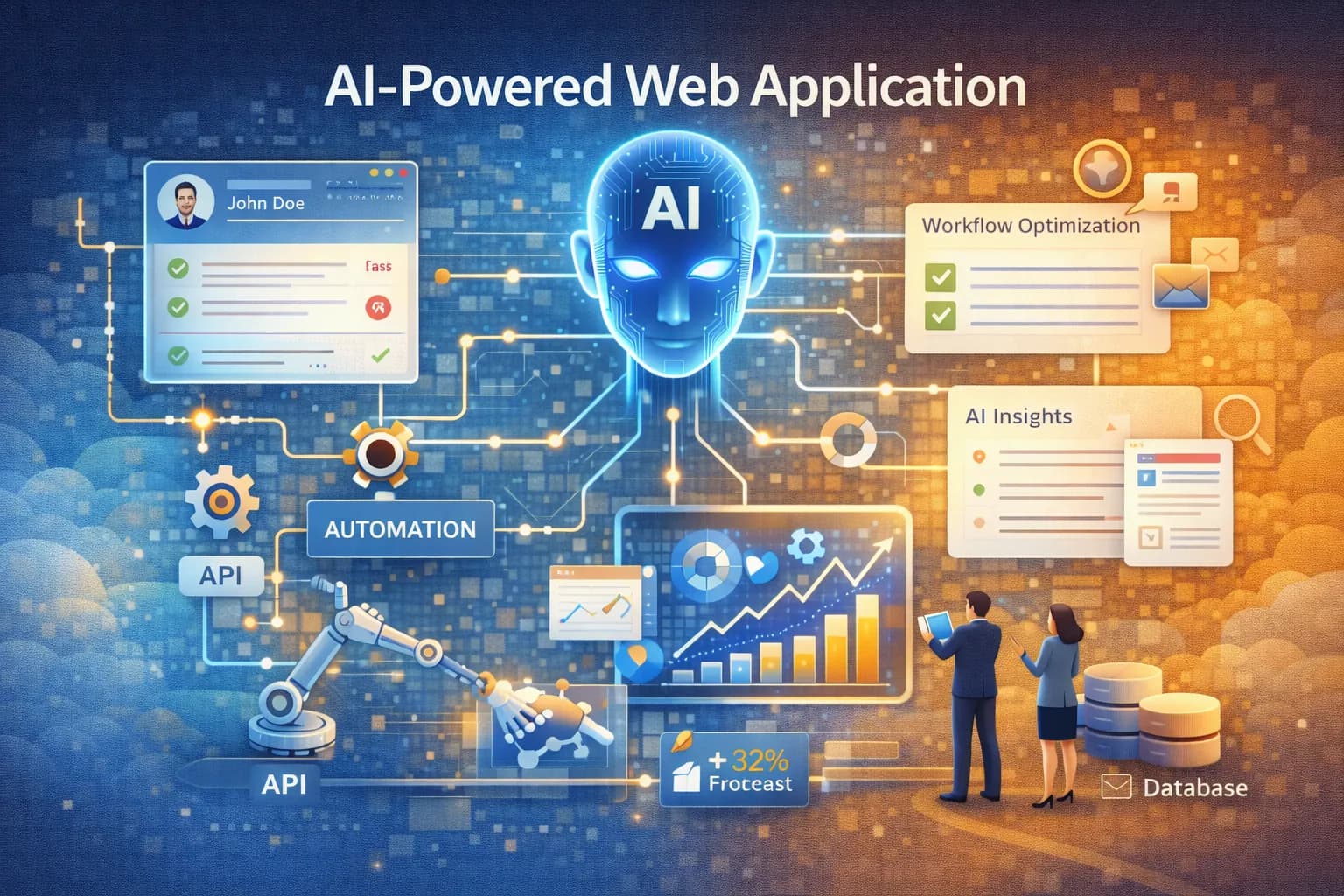
AI-powered web applications are becoming a core part of modern digital products. Businesses increasingly rely on AI to automate processes, analyze data, and deliver smarter user experiences. Unlike traditional applications, AI-driven systems continuously learn and adapt, enabling long-term efficiency and innovation.
Building AI-powered web applications requires more than adding a machine learning model. Success depends on architecture, data pipelines, system integration, and long-term maintainability.
What Makes a Web Application AI-Powered
An AI-powered web application integrates machine learning or intelligent decision-making into core workflows. These systems go beyond static logic and use data to influence behavior, recommendations, or automation.
Examples include recommendation engines, intelligent search, fraud detection systems, and predictive analytics dashboards.
Key Components of AI-Powered Web Applications
Data Collection and Processing
AI systems rely on continuous data collection from user interactions, system events, and external sources. Clean, structured data pipelines are essential for reliable model performance.
Machine Learning Models
Models analyze data patterns and generate predictions or classifications. Choosing the right model depends on the problem being solved, such as recommendation, prediction, or anomaly detection.
Backend Integration
AI logic must integrate seamlessly with backend systems. Frameworks like Django provide secure APIs, data validation, and scalable architecture for serving AI-powered features.
Architecture Considerations for AI Applications
AI-powered web applications require architectures that support scalability, reliability, and monitoring. Separating model inference from core business logic improves maintainability.
API-driven designs allow AI components to evolve independently while remaining connected to the main application.
User Experience and AI Transparency
AI should enhance user experience without creating confusion. Users should understand why certain recommendations or decisions are made.
Clear feedback, explanations, and predictable behavior build trust and adoption.
Performance and Scalability Challenges
AI features introduce computational overhead. Efficient caching, background processing, and optimized APIs are critical to maintaining performance.
Business Value of AI-Powered Web Applications
AI-powered applications reduce manual effort, improve personalization, and enable smarter decisions. Over time, these systems become strategic assets rather than simple tools.
How Square Tech IT Builds AI-Powered Web Applications
At Square Tech IT, we design AI-powered web applications with scalability, security, and maintainability in mind. Our solutions integrate AI seamlessly into real-world systems to deliver measurable business value.